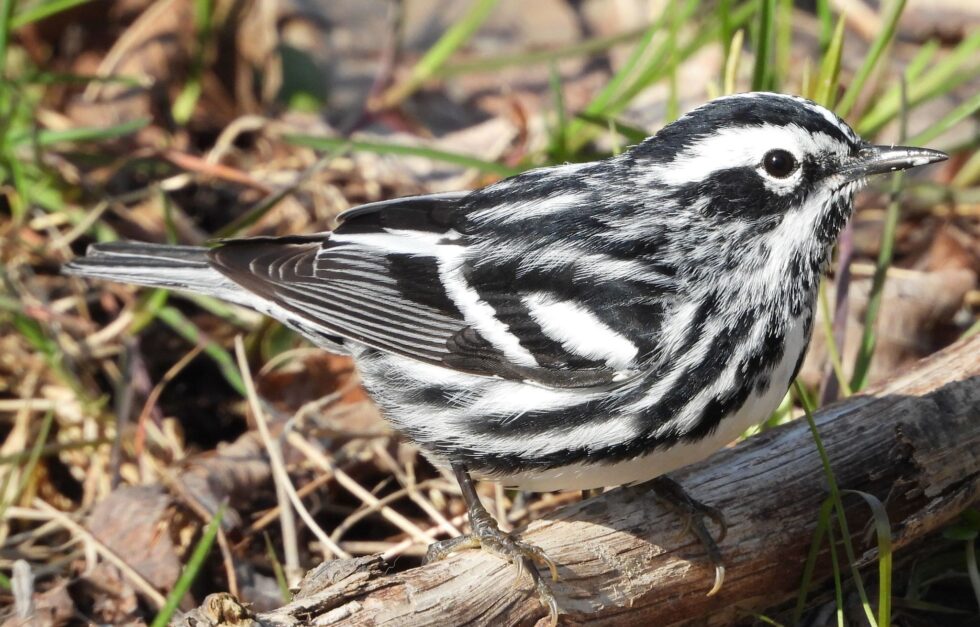
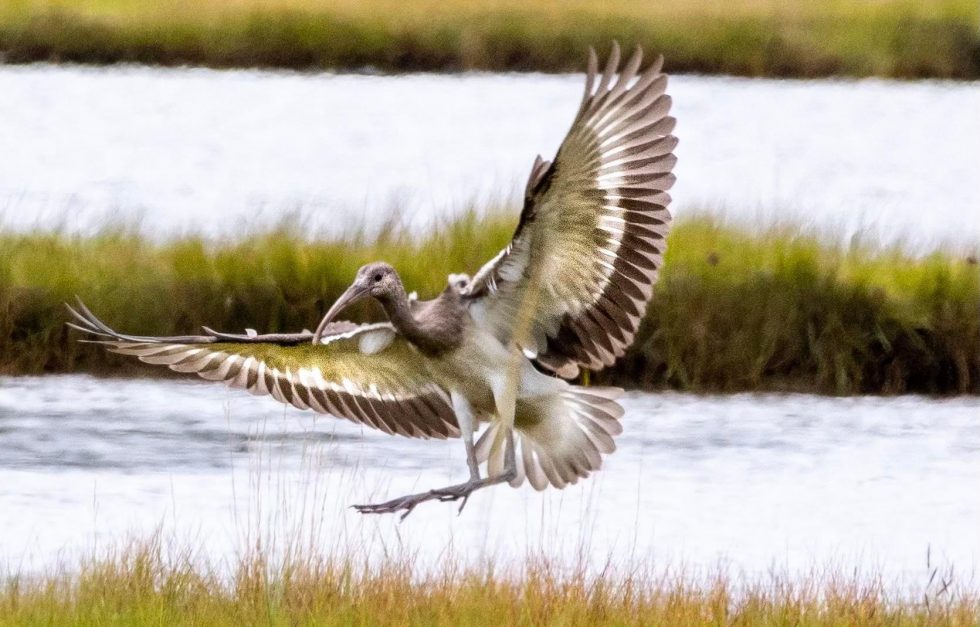
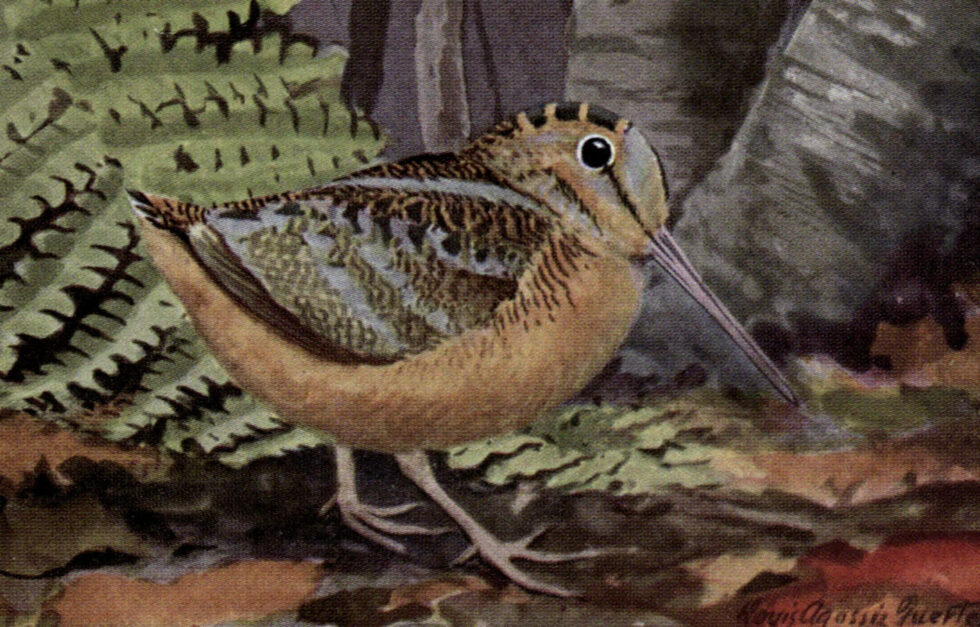
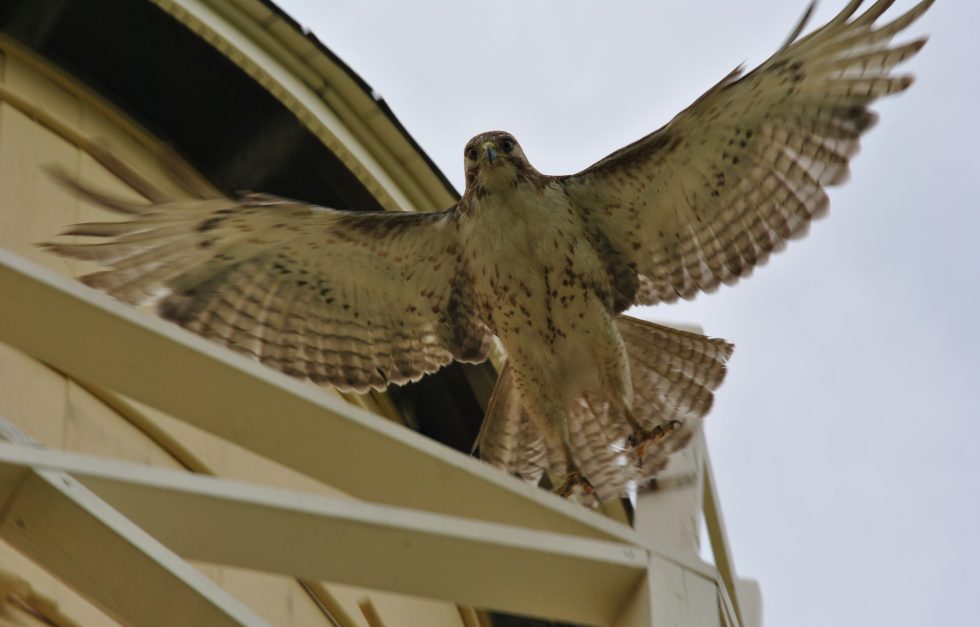
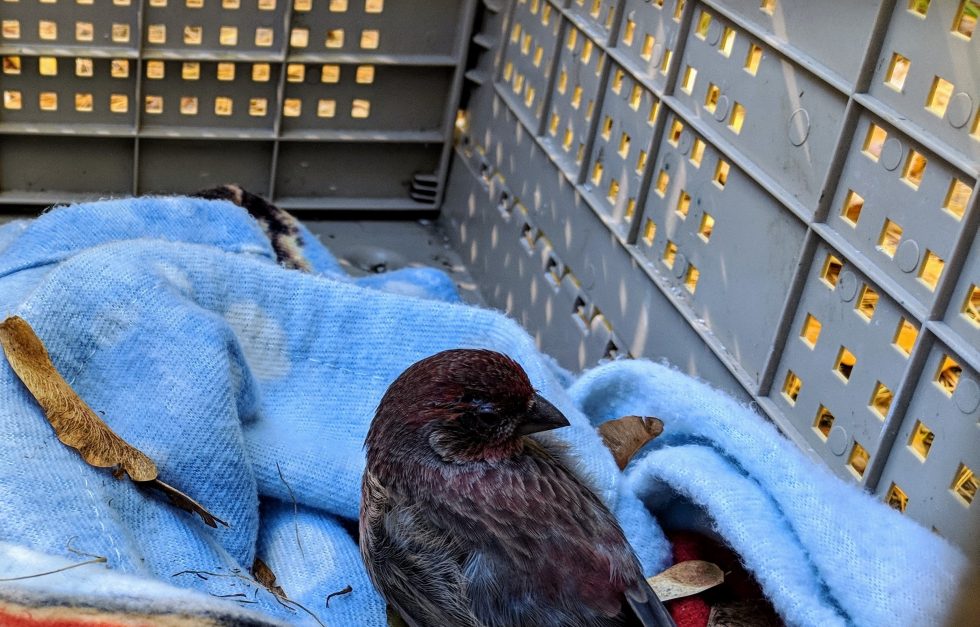
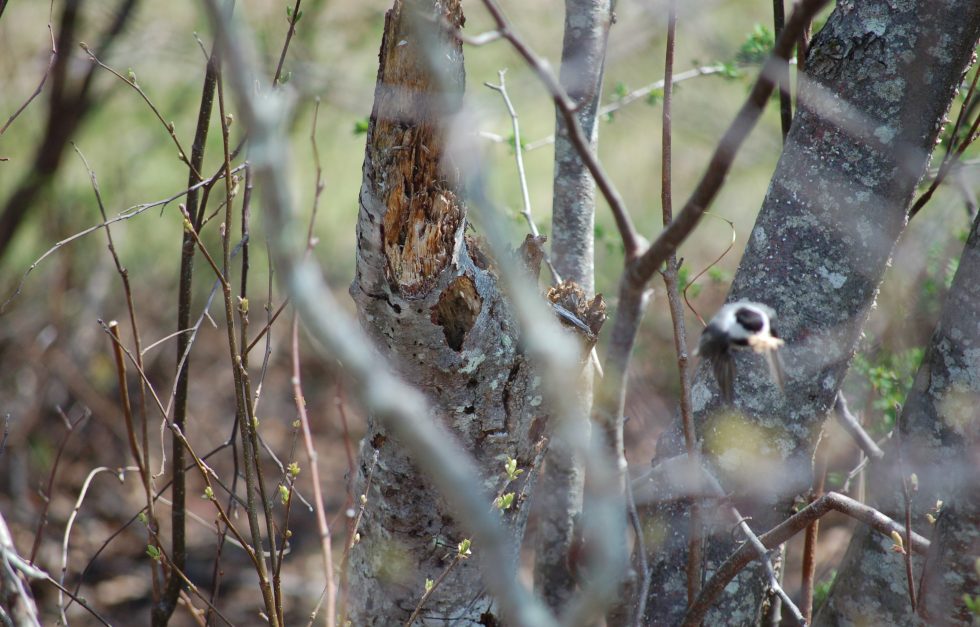
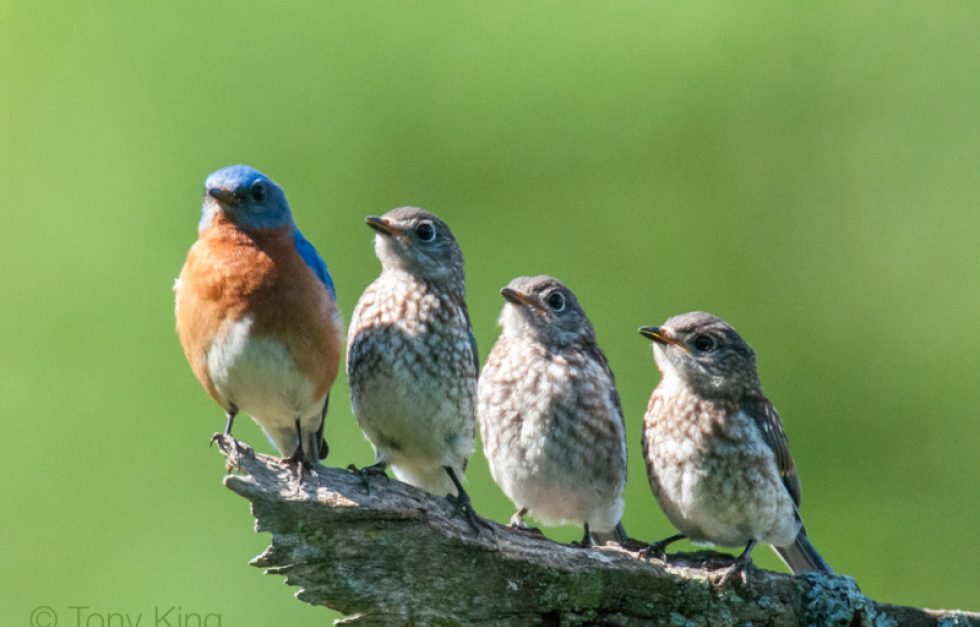
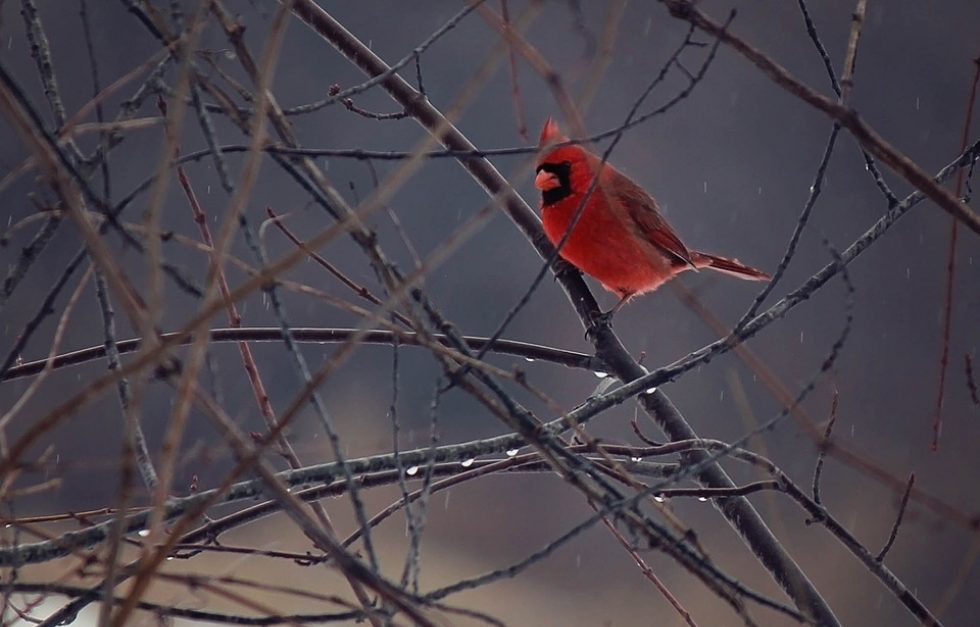
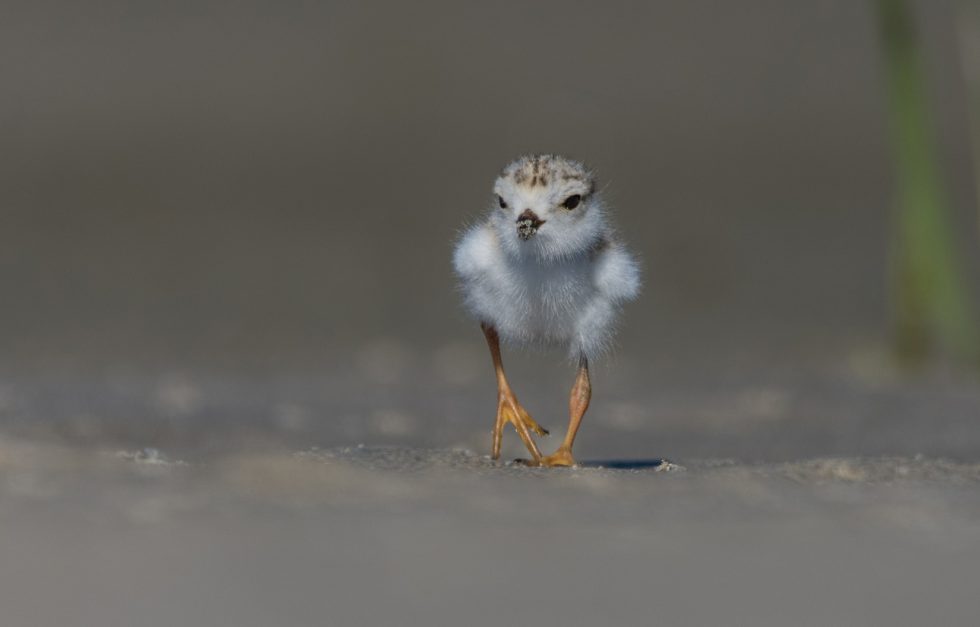
On September 17, 2009, this bird was caught in a mist net at the Wells Reserve and brought to the banding station under the copper beech. June Ficker, our highly knowledgeable and experienced bird bander, wanted photo documentation of this individual to share with other experts. Was she overly cautious or onto something? How would you identify this bird?
I fell short this morning. An unfamiliar song kept me following a skulker in the thick shrubs along the Barrier Beach Trail. Sweet sisiswit switchew ended up in my notebook. With a Chestnut-sided Warbler behind me and a Common Yellowthroat in front, I kept trying to convince myself this was an aberrant song from a resident, probably an inexperienced yellowthroat stumbling through its early attempts. Still, it was consistent, except for those occasions when immediately after finishing a song it would repeat itself once or twice as if mumbling an addendum.
It's a 20-year tradition: In each season of every year since 1989, birders from the York County Audubon Society have scoured the forests and fields, marshes and beach of the Wells Reserve, intent on counting all the birds they can see or hear in 3 hours. Teams spread out to cover four routes, never knowing what they'll encounter.
At yesterday's post-survey compilation, it was clear that the Muskie and Pilger trails were the hot spot. That's where most of the 127 warblers of 15 species were found.
Survey coordinator Joanne Stevens and data handler Nancy McReel have shared the full results from one of the birdiest quarterly surveys the Audubon team has done—75 species.…

"You never know what the day will bring!" That is especially true of my job as Natural Resource Specialist here at the Wells Reserve. For instance, last week my task was to walk down the length of Laudholm Beach with Nancy Viehmann in search of beached birds. This is part of a monthly survey for a nationwide program called SEANET.
The Seabird Ecological Assessment Network (SEANET), based at the Tufts Cummings School of Veterinary Medicine, is an ongoing project assessing seabird mortality along the eastern seaboard of the United States. Over 100 citizen scientists volunteer to walk an assigned stretch of beach once or twice a month, record environmental data and report both dead and live birds seen on the beach.
After our most recent snow fall, I had a visitor behind my home on the Alheim Property. I am not an Ornithologist by a long shot but I believe it is a Barred Owl. A beautiful bird and I thought I would share the Photo. Any birders out there think it's something else?

It's the 20th anniversary of bird banding at the Wells Reserve this year. The master bander who has been at the heart of the program all this time, June Ficker, recently looked back at her 1988 records and provided this summary:
Operated 6 12-meter mist nets from May 27 to August 31 for a total of 14 Wednesdays from 6 to 10:30 am.
Species banded: 19
Birds banded: 69
Gray Catbird: 18
Black-capped Chickadee: 8
American Robin: 8
Eastern Phoebe: 7Other species banded: American Redstart, Black-and-white Warbler, Black-throated Green Warbler, Cedar Waxwing, Chipping Sparrow, Common Yellowthroat, Downy Woodpecker, Eastern Wood-pewee, Ovenbird, Rose-breasted Grosbeak, Red-eyed Vireo, Rufous-sided (Eastern) Towhee, Song Sparrow, Tennessee Warbler, Veery
Visitors observing: 129
The pattern strengthens over time. Twice a year, in November and February, the Wells Reserve parking lot and adjacent grassy areas attract a small number of Snow Buntings. Without surveilling the area more regularly than I do, it's hard to say whether they're around every day. Whenever they do appear, it's a brightening experience.
The four that were pecking through sandy puddles and winter-worn weeds this morning provided a "life bird" for one lucky visitor. As spring approaches, I expect the opportunity for others to find them in the vicinity is getting short.
[Winged Wednesday XVI]
Time flies. It’s nearly a year since the last Winged Wednesday.
My 2007 quest for “99 Common Birds” has ended 19 species shy of the goal, even though I compiled a list of 112 species at the Wells Reserve during the year. It is an interesting coincidence that I also tallied just 80 of the 99 so-called common species during 2006.
Most of my misses in ‘06 were ticked in ‘07, but once again it is clear that had I gone afield specifically to find the 99 I would have been more successful than letting the ticks fall where they may.
I've made checkmarks on a copy of "99 Common Birds," our brochure listing the most expected species at the Wells Reserve, and although my Reserve bird list for 2006 contains 106 species, I only got 80 of the 99 "common" ones.
While I saw some tricky species — Snow Goose, Tricolored Heron, Laughing Gull, Fish Crow, Field Sparrow — I missed some that point to holes in my coverage and make me wonder if I simply forgot to write them down. How could I have missed Bufflehead, Broad-winged Hawk, Semipalmated Sandpiper, and American Redstart? By not being in the right place at the right time, I suppose.
I'll keep listing the birds I see at the Wells Reserve, where about 240 species have been recorded by scores of observers. By the end of 2007, I hope I can tally all 99 "common" birds and half again as many "less common" ones.
Weather permitting, I'll start my list on January 3 at 9 am. Join me?
UPDATE January 3: To the beach and back, an hour out, and 15 "common" species in the log.
That was the bird of the day!
A woodland hawk hunting for breakfast found its course suddenly interrupted by the woven nylon of our bird bander's mist net. It was a Cooper’s Hawk, just a few months old, and with its 285 mm wing chord proved to be a female.
Too hot to move. That's what the birds must be thinking. The banders had the nets up soon after 5:30, by which time it was already over 80 degrees. Six hours later, they closed them down, having completed the requisite duration. By then it was 95.
Just three birds in those six hours, all hatch-year captives — two Black-and-white Warblers and an American Robin.
Three. That's the banders' lowest total ever. It's got to be cooler next week.
The intrepid banders caught 14 birds today; it has been a consistently modest summer for the nets so far...
| June 7 | rainout |
| June 14 | 16 birds |
| June 21 | 15 birds |
| June 28 | 15 birds |
| July 5 | 14 birds |
Eight more weeks to go… it's always a mystery what will happen on banding days.
[ Winged Wednesday VIII ]
Several Least Terns were over the Webhannet marsh today, scanning for fish in the pools and salt-marsh pannes below and diving to snag them when the moment was right. Before long they will be gathering on Laudholm Beach and elsewhere along the Maine coast to begin their breeding season.
Bobolinks were back in force at the Wells Reserve today. Their song might be the craziest in the region — it's so much fun to hear them bubbling with enthusiasm! Today, at least four sang from fields near the main campus, sharing the space with Eastern Meadowlarks.
It's fortunate that the reserve's Resource Advisory Committee created a grassland management plan several years ago, recognizing the value of nearly 100 acres of open fields for birds like Bobolinks and meadowlarks. The mowing regimen, needed to keep shrubs from taking over, specifically avoids the nesting period for these birds.
Rain or shine meant rain. Not so much rain, perhaps, as drizzle, but the Forest Learning Shelter provided good cover for a meeting place and starting point for a half-hour walk.
Cool, damp, breezy weather kept bird activity to a minimum; no migratory burst in evidence, though a couple of "new" warblers have arrived and the morning list held 20-plus species.
We'll try again next week, same place, same time, and yes, rain or shine.
This morning in the rain sang a mimic, repeating phrases once or twice then moving on. The bird was by the pumpkin patch — or maybe in the stand of lilacs. I was on my routine approach to the big house.
I had to take a couple of steps toward the sound to enjoy it — and to be sure I wasn't hearing a mockingbird. No: Thrasher. First of the spring.
That's this Winged Wednesday. Next one starts at the Forest Learning Shelter at 9:30 on the 10th. Rain or shine.
More singing in the air today. The avian highlight of a brief noontime walk was a Merlin winging northward low over a field beyond the barns.
A flock of 45 Canada Geese flew north along the shoreline this morning. Below them, in the Webhannet Marsh along Wells Harbor Road, stood a solitary Great Blue Heron. Somewhere way up, a Tree Swallow scratched out a few notes. They're hints of spring movement that ought to start in earnest any day now.
Green-winged Teal, American Black Ducks, Canada Geese, and Mallards were the waterfowl close at hand. Red-winged Blackbirds and Song Sparrows were singing strongly, as was a sole Northern Mockingbird.
At mid day near the Wells Reserve campus, a Red-tailed Hawk got mobbed by crows and a Turkey Vulture rocked over the grasslands. The woods were mostly quiet — still mostly chickadees. American Robins, though, are hopping about by the dozens where the grass is packed down.
Showing blog posts tagged birds: 1–5 of 18