The Wells Reserve boundary stretches well beyond the familiar Laudholm campus, as our partnership with the USFWS Rachel Carson National Wildlife Refuge means the reserve includes most salt marsh habitats within the Town of Wells. So when birder Brian Harris photographed a Barnacle Goose (with Mallard and American Black Ducks) on the Moody marsh, he documented a new species for both the refuge and the reserve. For the reserve, this would be species number 265.
For years now, we've been handing out Seafood Watch pocket guides so people can make more careful decisions about what fish and shellfish to buy or avoid. The Monterey Bay Aquarium publishes regional guides, so the information is tailored to residents of the northeast, for example.
Now the aquarium has made ocean-friendly seafood recommendations even more convenient for smartphone users with its Seafood Watch app for iPhone or Android. At our house, the printed "pocket guide" often lived under a magnet on the refrigerator or got pierced by a thumbtack on the bulletin board, rarely making the trip to market. Now we will have the critical data in hand, as our mobile devices don't get left behind.
I noted 132 species during 2011, but only 92 of the ones on our "99 common birds" checklist. These are the ones I missed:
![By Wolfgang Wander (self-made / http://www.pbase.com/image/70628654) [GFDL (www.gnu.org/copyleft/fdl.html) or CC-BY-SA-3.0 (www.creativecommons.org/licenses/by-sa/3.0/)], via Wikimedia Commons Red-breasted Nuthatch photo by Wolfgang Wander from Wikimedia Commons](/writable/images/flora-fauna/red-breasted-nuthatch_wolfgang-wander.jpg)
- Lesser Yellowlegs
- Spotted Sandpiper
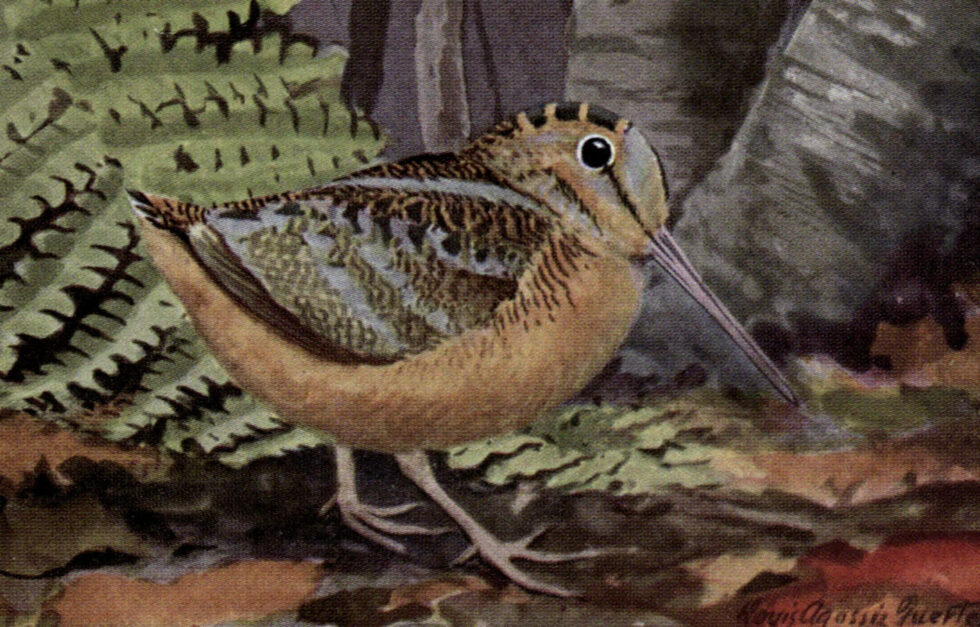
- American Woodcock
- Eastern Wood-Pewee
- Great Crested Flycatcher
- Red-breasted Nuthatch
- Rose-breasted Grosbeak
Associated People Charles Lord
Charles, Mark, and Frank installed seven bat houses within four of the Reserve's fields today, in an effort to provide habitat for the local population of these insectivorous flying mammals who eat up to 1,000 insects per hour. Below are pictures taken during one of the installations. We are hoping that bats will move in to this new real estate in the spring!

Last night at the Reserve, wildlife biologist Jonathan Mays captivated the audience with an account of his research studying black racer populations in the Wells Barrens. From 2007 to 2010, 14 racers were surgically implanted with radio transmitters to determine racer habitat use, home range size, and denning ecology.
As a result of the study, we now know that the studied population of black racers are habitat specialists, preferring open shrubland/sand barren areas. Species of vegetation that racers seem to use most often as cover include lowbush blueberry and sweet fern. Both males and females spend the majority of their time in these shrublands, going largely unnoticed.
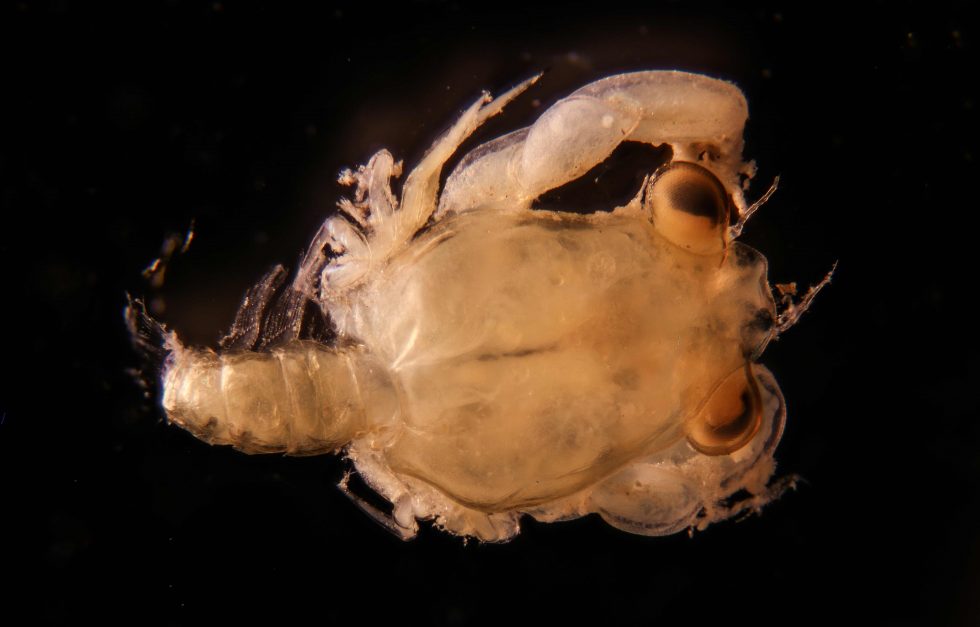
While monitoring for invasive species this week with the MIMIC program, I came across a species of shrimp I have not seen in my 4 years of monitoring at this site. The species is Palaemon elegans, the European Rock Shrimp, and is quite different in appearance from our native species of "estuarine" shrimp, Crangon septemspinosa (sand shrimp) and Palaemonetes pugio (grass shrimp). I found 2 adult gravid females in a tide pool on a rocky point surrounded by sand beaches, and many juveniles in the same pool. It was first sighted in New England last summer in Salem Sound (found by Salem Sound Coast Watch volunteers) and we believe this is only the second confirmed sighting of the shrimp in the Gulf of Maine.
Looks like we got a new addition to the intertidal…
The avian community at the end of March is not dramatically different than the one that has been around for the past few months, but behaviors have changed. The birds are getting noisier.
An update of the Wells Reserve bird list has been overdue for some time. Now it's done.
In the past couple of weeks, it's been hard not to notice the bright yellow plastic cards that have appeared in clumps of vegetation. Yesterday, I caught up with the guy who has been hanging and collecting them, field research entomologist Phil Stack. He filled me in; they are traps for catching fruit flies.
On September 17, 2009, this bird was caught in a mist net at the Wells Reserve and brought to the banding station under the copper beech. June Ficker, our highly knowledgeable and experienced bird bander, wanted photo documentation of this individual to share with other experts. Was she overly cautious or onto something? How would you identify this bird?
Associated People Jacob Aman Jeremy Miller Ashley Pinkham
Fishing has begun on the Saco River. On four dates in late June, researchers set fyke nets at eight sites along the river. They surveyed day and night and, except for one frightening microburst, had excellent conditions for field work. Hundreds of fish and shellfish were caught, identified, measured, and released. This project, focusing mainly on fish using the salt marsh, is part of a collaborative study with the University of New England that looks at the effects of upland land use on the river ecosystem.
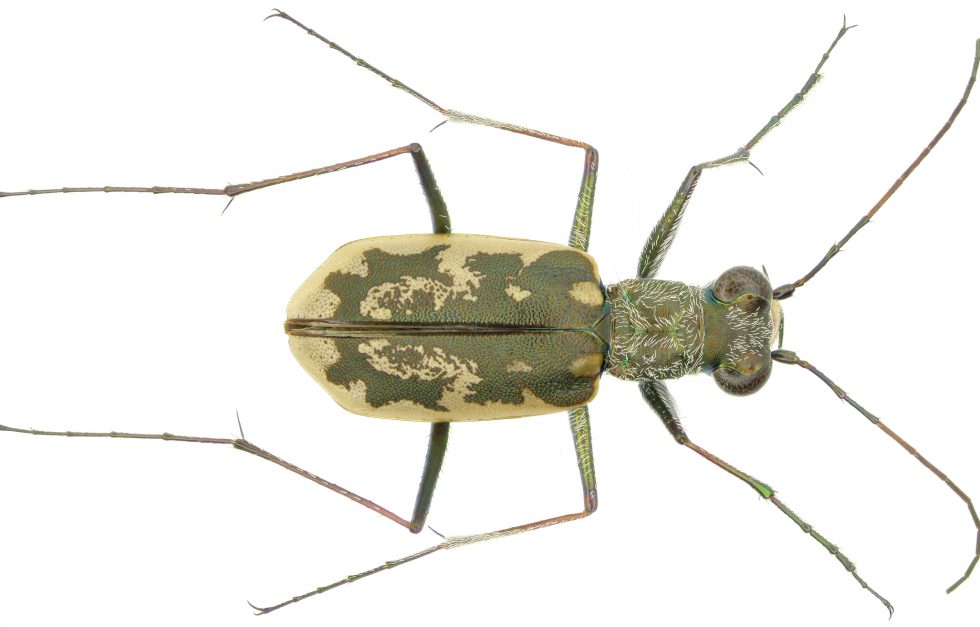
Volunteer naturalist Eileen Willard spotted this Goldsmith Beetle (Cotalpa lanigera) outside the Visitor Center on May 31 and telephoned insect enthusiast Brandon Woo to tell him about it. Brandon came and photographed the uncommon insect.
Moose are not often seen at the Wells Reserve, but one was photographed on Memorial Day by Stephen Ingraham, who kindly shared these images.

I fell short this morning. An unfamiliar song kept me following a skulker in the thick shrubs along the Barrier Beach Trail. Sweet sisiswit switchew ended up in my notebook. With a Chestnut-sided Warbler behind me and a Common Yellowthroat in front, I kept trying to convince myself this was an aberrant song from a resident, probably an inexperienced yellowthroat stumbling through its early attempts. Still, it was consistent, except for those occasions when immediately after finishing a song it would repeat itself once or twice as if mumbling an addendum.
It's a 20-year tradition: In each season of every year since 1989, birders from the York County Audubon Society have scoured the forests and fields, marshes and beach of the Wells Reserve, intent on counting all the birds they can see or hear in 3 hours. Teams spread out to cover four routes, never knowing what they'll encounter.
At yesterday's post-survey compilation, it was clear that the Muskie and Pilger trails were the hot spot. That's where most of the 127 warblers of 15 species were found.
Survey coordinator Joanne Stevens and data handler Nancy McReel have shared the full results from one of the birdiest quarterly surveys the Audubon team has done—75 species.…

It is the first warm spring day and just as the sun starts to set, the air comes alive with high pitched peeping and what sounds like ducks quacking in the woods. That is when you know spring has officially arrived. The sounds are coming from two types of small frogs: spring peepers and wood frogs.
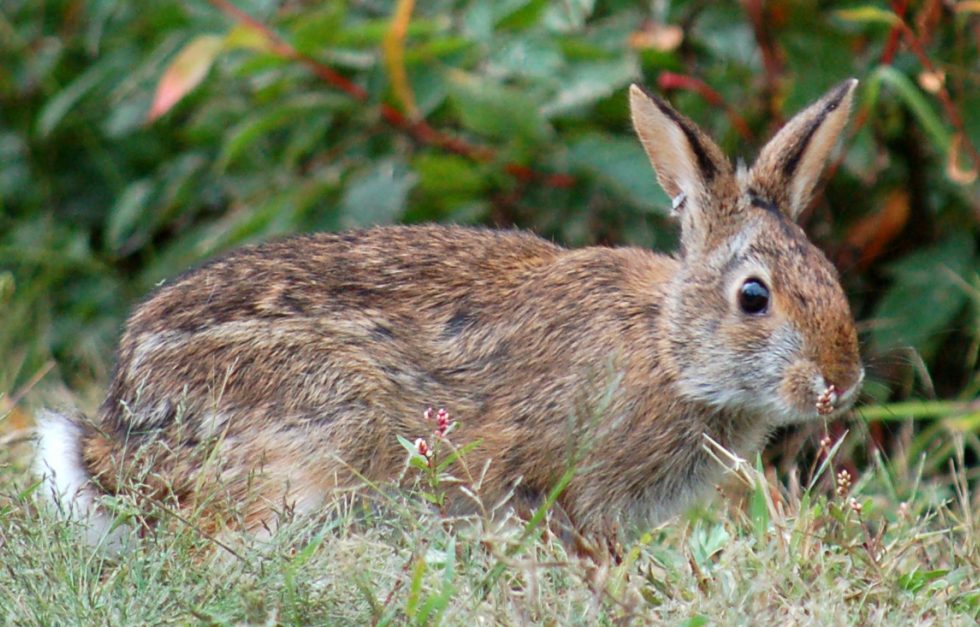
The Wells Reserve is home to a core population of the New England cottontail, a rabbit being considered for listing under the Endangered Species Act. We've reported before on the Reserve's efforts to improve habitat for the rare bunnies, and now the Environmental Defense Fund has issued A Landowner's Guide to New England Cottontail Habitat Management. If you are interested in making an impact on the survival of New England cottontails, you can start by following guidelines in the new publication, which is available as a downloadable PDF from the EDF website.
It's the 20th anniversary of bird banding at the Wells Reserve this year. The master bander who has been at the heart of the program all this time, June Ficker, recently looked back at her 1988 records and provided this summary:
Operated 6 12-meter mist nets from May 27 to August 31 for a total of 14 Wednesdays from 6 to 10:30 am.
Species banded: 19
Birds banded: 69
Gray Catbird: 18
Black-capped Chickadee: 8
American Robin: 8
Eastern Phoebe: 7Other species banded: American Redstart, Black-and-white Warbler, Black-throated Green Warbler, Cedar Waxwing, Chipping Sparrow, Common Yellowthroat, Downy Woodpecker, Eastern Wood-pewee, Ovenbird, Rose-breasted Grosbeak, Red-eyed Vireo, Rufous-sided (Eastern) Towhee, Song Sparrow, Tennessee Warbler, Veery
Visitors observing: 129
Associated People Michele Dionne
Michele Dionne, Director of Research at the Reserve, has an ongoing collaboration with Dr. Celia Chen at Dartmouth College to study how mercury moves through the salt marsh system. When some of her lab crew headed out to catch Atlantic silversides to be tested for mercury content, we got some of these small fish instead, which we originally thought must be herring.
In today’s Portland Press Herald, Josie Huang reports in Lyme disease threat comes back strong that winter went easy on deer ticks and the little critters are especially abundant this spring.
Regulars at the Wells Reserve know it’s a hot spot for Ixodes scapularis and most plan their trail walks accordingly. In this image, the hiker on the left demonstrates a couple of key ways to minimize the chance that a tick will get under her skin. The hiker on the right is poorly prepared for prevention.
- Tuck pant legs into socks, so ticks climb up your legs outside instead of inside, and
- Wear light-colored clothing, so the dark ticks are easier to spot and remove.
It’s the deer tick nymph, mainly active now through July, that imposes the greatest risk of passing Lyme disease, so take precautions and you can still enjoy the beauty of Wells Reserve trails with a bit less worry.
For more facts on ticks in Maine, we recommend the Maine Medical Center Research Institute website.
The pattern strengthens over time. Twice a year, in November and February, the Wells Reserve parking lot and adjacent grassy areas attract a small number of Snow Buntings. Without surveilling the area more regularly than I do, it's hard to say whether they're around every day. Whenever they do appear, it's a brightening experience.
The four that were pecking through sandy puddles and winter-worn weeds this morning provided a "life bird" for one lucky visitor. As spring approaches, I expect the opportunity for others to find them in the vicinity is getting short.
Time flies. It’s nearly a year since the last Winged Wednesday.
My 2007 quest for “99 Common Birds” has ended 19 species shy of the goal, even though I compiled a list of 112 species at the Wells Reserve during the year. It is an interesting coincidence that I also tallied just 80 of the 99 so-called common species during 2006.
Most of my misses in ‘06 were ticked in ‘07, but once again it is clear that had I gone afield specifically to find the 99 I would have been more successful than letting the ticks fall where they may.
Associated People Michele Dionne
The Wells Reserve today hosted Senator Susan M. Collins for "Mercury in a Maine Estuary & National Mercury Monitoring Event," presented in conjunction with the BioDiversity Research Institute (BRI).
On a recent kayak trip down a narrow winding river, a beaver and I passed closely by, I was on a leisurely paddle and it was on a mission. I think leisure is a foreign concept to this creature. Thus the adage: Busy as a beaver.
We as humans seem to have developed a love/hate relationship with this industrious large rodent. It is very much like us in the fact that it is skillful at manipulating its environment to suit its own needs. The Native Americans thought the similarity was so great that they named the beaver "the little people." Food and security are what it works long hours to achieve.
The Wells Reserve couldn't run without its army of volunteers. They help with every aspect of activity here. One task that I never have problem getting volunteers to help with is going out into the field with insect nets and catching dragonflies and butterflies.
In 1999 the Maine Department of Inland Fisheries and Wildlife started a state-wide survey of dragonflies. That survey concluded in 2004. This year starts the first year of a survey for Maine's butterflies. MDIF&W relies on citizen scientists to go out and collect specimens in as many different places in state as possible. To increase our knowledge of what kinds of insects we have at the Wells Reserve, we established several sites to sample here as part of those two programs.
According to the Maine Butterfly Survey website one of the goals of the survey is "acquiring a solid baseline of the distribution and abundance of Maine butterflies."
Because of their short generation times, sensitivity to environmental insults and often narrow habitat requirements, insects can be effective sentinels of environmental change. As the specter of global warming looms, wildlife biologists and ecologists need to be able to monitor the direction and rate of changes in plant and animal populations. The use of any group of organisms to monitor population changes requires a firm baseline of information against which changes can be judged.
With over 115 species native to Maine, butterflies contribute a colorful and conspicuous component to our state's biological diversity. Butterflies play an important role in terrestrial and wetland ecosystems by serving both as pollinators of many wildflowers and prey (both caterpillars and adults) to larger species ranging from dragonflies to birds.
For more information on both these programs, visit the Maine Damselfly and Dragonfly Survey and the Maine Butterfly Survey.
62, 59, 60
Spanning over the subtidal zone, harbor docks make convenient places to see fish in their natural setting. And fussing with fishing gear isn’t even necessary.
Now that spring has arrived and all sorts of new sights, sounds and smells have emerged from the forests and wetlands — it can be difficult to identify flora and fauna in its fleeting blossoms, migration, or courting display. These harbingers can last from a few weeks to just one evening. I find it fascinating to witness life taking advantage of what was just recently frozen solid.
Wells Harbor is a fantastic place to see local species of fish. Its wooden piers and docks provide human access above a subtidal zone (a place that never fully drains during low tide) and often 'harbors' schools of juvenile and adult fishes. The pilings and docks provide structure for many species of plants and animals that attach themselves to the substrate and provide habitat for many invertebrate species, amphipods and copepods in particular, which find shelter within this "fouling" community
The Wells Reserve Visitor Center has kept a wildlife sightings log for at least a decade. While updating the form today (it's now labeled Nature Observations), I pulled out the stack of sheets that have accumulated since May 1996.
Birds dominate visitors' sightings, though deer, weasel, garter snake, otter, praying mantis, mosquito, and other animals found their way in, too.
How reliable are those bird sightings? Hard to say. Not everyone who sees something knows exactly what to call it, but the report is probably okay; "blue hering" is a good example.
But what of the "yellow head blackbird" seen in the fields? It might truly have been a Yellow-headed Blackbird, but based on the misspelling Bobolink could be a better bet.
Cerulean Warbler? Prothonotary Warbler? Golden Eagle? All possibilities. Unfortunately, the wildlife sightings log holds no details for evaluating any of these rarities.
The vast majority of reports are expected species at expected seasons. Still, the collection of notes could bolster our knowledge of migrating, overwintering, and easy-to-see birdlife. These shared observations from scores of people may help us to better understand changes in the Reserve bird populations over time. Keep 'em coming!
Last week I came upon 15 species, usually in ones or twos, during an hour afield. Today, with a lot less time, I managed a single species, European Starling, but my "individuals" count was higher.
One-hundred-plus starlings perched in the shared crown of twin maples growing behind the old garages, silently congregated above a sagging shed, beaks windward.
What's a teleost? Let's see what Wikipedia has to offer...
Teleostei is one of three infraclasses in class Actinopterygii, the ray-finned fishes. This diverse group, which arose in the Triassic period, includes 20,000 extant species in about 40 orders. The other two infraclasses, Holostei and Chondrostei, are paraphyletic.
I've made checkmarks on a copy of "99 Common Birds," our brochure listing the most expected species at the Wells Reserve, and although my Reserve bird list for 2006 contains 106 species, I only got 80 of the 99 "common" ones.
While I saw some tricky species — Snow Goose, Tricolored Heron, Laughing Gull, Fish Crow, Field Sparrow — I missed some that point to holes in my coverage and make me wonder if I simply forgot to write them down. How could I have missed Bufflehead, Broad-winged Hawk, Semipalmated Sandpiper, and American Redstart? By not being in the right place at the right time, I suppose.
I'll keep listing the birds I see at the Wells Reserve, where about 240 species have been recorded by scores of observers. By the end of 2007, I hope I can tally all 99 "common" birds and half again as many "less common" ones.
Weather permitting, I'll start my list on January 3 at 9 am. Join me?
UPDATE January 3: To the beach and back, an hour out, and 15 "common" species in the log.
In an effort to increase habitat for the New England cottontail rabbit, today the Reserve brought in a hydro-ax supplied by the USFWS Rachel Carson National Wildlife Refuge.
The machine felled some 10 acres of young alder stands in one day, forcing the areas to an early stage of succession. As brush regenerates, cottontails and other early-succession species (American woodcock, for example) will have more living space.
The two primary areas affected were along the Muskie Trail and near the Skinner Mill.
Now is the time of the year where many animals head south to warmer climates for the winter. Birds seem to show the most familiar behavior, such as flocks of Canada geese in the "V" formation flying over head. It's as emblematic as the colorful tree foliage or waking to see that first crisp frost. These are signs of autumn's arrival as well as encroaching cold weather.
Hundreds of swallows coursed over Laudholm Beach today, swarming to the dunes and back in a mass oblivious to an onlooker. They were mostly Tree Swallows, with a few Barns and fewer Banks/Rough-wingeds mixed in.

That was the bird of the day!
A woodland hawk hunting for breakfast found its course suddenly interrupted by the woven nylon of our bird bander's mist net. It was a Cooper’s Hawk, just a few months old, and with its 285 mm wing chord proved to be a female.
One icehouse chrysalis has become translucent and a near-adult monarch is now visible through the case. Thanks, Laura L, for the irresistible photographic update.
The Reserve's milkweed feeds multitudes of monarch larvae. The adult butterflies seem to be especially abundant this summer and signs that they're reproducing are commonplace. The clapboard siding of the icehouse has proven popular with monarch caterpillars. Here, a newly formed chrysalis conceals an amazing transformation while another larva fastens up before molting its skin to reveal the chrysalis formed within.
Too hot to move. That's what the birds must be thinking. The banders had the nets up soon after 5:30, by which time it was already over 80 degrees. Six hours later, they closed them down, having completed the requisite duration. By then it was 95.
Just three birds in those six hours, all hatch-year captives — two Black-and-white Warblers and an American Robin.
Three. That's the banders' lowest total ever. It's got to be cooler next week.
Overheard…
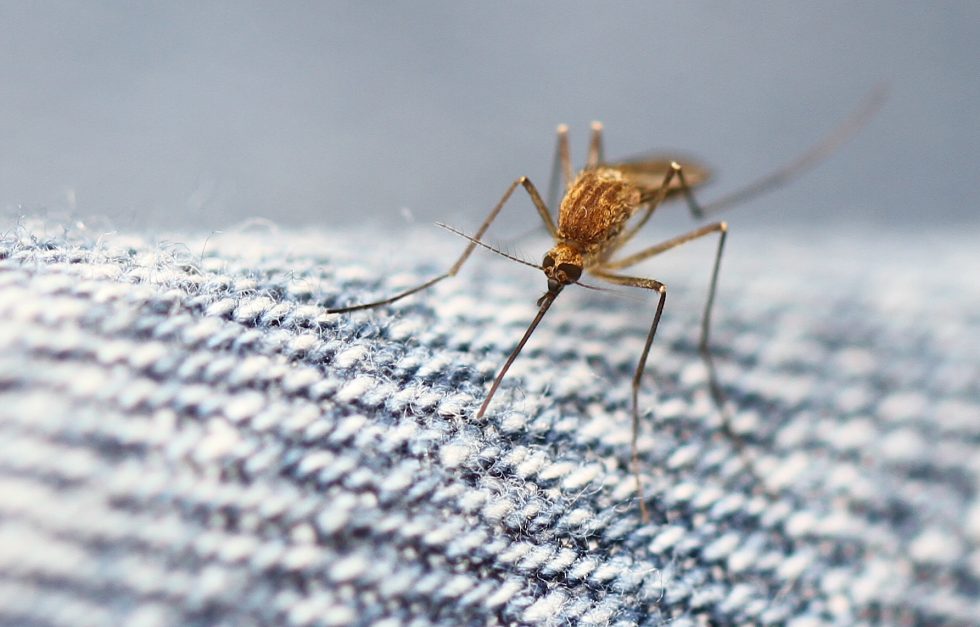
I've seen the mosquitoes here before, but not like that. They were swarming.
Yes, the Culicidae conditions can cause consternation. Bring the bug dope.
The intrepid banders caught 14 birds today; it has been a consistently modest summer for the nets so far...
| June 7 | rainout |
| June 14 | 16 birds |
| June 21 | 15 birds |
| June 28 | 15 birds |
| July 5 | 14 birds |
Eight more weeks to go… it's always a mystery what will happen on banding days.
[ Winged Wednesday VIII ]
As the month of May closes, so does most of the major passage of migrating birds. The movement is not over; it just isn't so obvious.
Summer approaches and with it come myriad winged creatures without feathers, so in coming weekly reports some insects might find themselves the objects of attention.
Today's butterflies (to get things started entomologically) included sulfurs, ladies, and blues, just a few of the many species that can be found here between spring and fall. Exactly how many species might appear on site is unknown; the reserve has no comprehensive list of its butterflies. Surveying them would be fascinating and beneficial.
Several Least Terns were over the Webhannet marsh today, scanning for fish in the pools and salt-marsh pannes below and diving to snag them when the moment was right. Before long they will be gathering on Laudholm Beach and elsewhere along the Maine coast to begin their breeding season.
Bobolinks were back in force at the Wells Reserve today. Their song might be the craziest in the region — it's so much fun to hear them bubbling with enthusiasm! Today, at least four sang from fields near the main campus, sharing the space with Eastern Meadowlarks.
It's fortunate that the reserve's Resource Advisory Committee created a grassland management plan several years ago, recognizing the value of nearly 100 acres of open fields for birds like Bobolinks and meadowlarks. The mowing regimen, needed to keep shrubs from taking over, specifically avoids the nesting period for these birds.
Rain or shine meant rain. Not so much rain, perhaps, as drizzle, but the Forest Learning Shelter provided good cover for a meeting place and starting point for a half-hour walk.
Cool, damp, breezy weather kept bird activity to a minimum; no migratory burst in evidence, though a couple of "new" warblers have arrived and the morning list held 20-plus species.
We'll try again next week, same place, same time, and yes, rain or shine.
This morning in the rain sang a mimic, repeating phrases once or twice then moving on. The bird was by the pumpkin patch — or maybe in the stand of lilacs. I was on my routine approach to the big house.
I had to take a couple of steps toward the sound to enjoy it — and to be sure I wasn't hearing a mockingbird. No: Thrasher. First of the spring.
That's this Winged Wednesday. Next one starts at the Forest Learning Shelter at 9:30 on the 10th. Rain or shine.
More singing in the air today. The avian highlight of a brief noontime walk was a Merlin winging northward low over a field beyond the barns.
Piping Plovers returned to Laudholm Beach by today. They'll likely be with us into August. Let's hope for a productive year here and along the Maine and Atlantic coasts.
A flock of 45 Canada Geese flew north along the shoreline this morning. Below them, in the Webhannet Marsh along Wells Harbor Road, stood a solitary Great Blue Heron. Somewhere way up, a Tree Swallow scratched out a few notes. They're hints of spring movement that ought to start in earnest any day now.
Green-winged Teal, American Black Ducks, Canada Geese, and Mallards were the waterfowl close at hand. Red-winged Blackbirds and Song Sparrows were singing strongly, as was a sole Northern Mockingbird.
At mid day near the Wells Reserve campus, a Red-tailed Hawk got mobbed by crows and a Turkey Vulture rocked over the grasslands. The woods were mostly quiet — still mostly chickadees. American Robins, though, are hopping about by the dozens where the grass is packed down.
Midway through March, early signs of vernal reawakening appear at the Wells Reserve. Those most famous harbingers, the robins, actually drop in now and then throughout the winter, but their numbers certainly increase as migratory flocks from our south pass through or move in.
Associated People Susan Bickford
For several years, the Wells Reserve has participated in the Maine Dragonfly and Damselfly Survey, a project initiated by the Maine Department of Inland Fisheries and Wildlife.
Sue Smith Bickford, our main odonate enthusiast, was away for most of the 2005 flight season, but today shipped off 14 specimens for identification. They will be inspected and entered into the MDDS database to go with well over 100 other samples taken in the Reserve's salt marshes.
Results from the first several years of statewide odonate sampling have improved biologists' knowledge of the distribution and flight periods of dragonflies and damselflies in Maine. And Sue has contributed at least one notable record: the first Citrine Forktail documented in the state since 1958.
Today's Lunch 'n' Learn topic was turkey. Two dozen of us learned about jakes and jennies, as well as dewlaps, snoods, and caruncles.
Showing blog posts tagged fauna: 1–5 of 52